AI search has produced a new layer of confident advice: add a special file, repeat a brand name, write a paragraph for every possible question, and an answer engine will cite you.
The official guidance is less dramatic. Useful content still has to be crawlable, original, specific, well sourced, and easy for a person to use. AI search optimization starts there.
Quick answer
AI search optimization means publishing the clearest, most trustworthy page for a real query, then making it easy to crawl, index, understand, and cite. Use server-rendered text, descriptive headings, original evidence, accurate dates, internal links, relevant images, canonical URLs, and matching structured data. Allow the search crawlers you want. No file, schema type, or writing trick guarantees inclusion.
What AI search optimization actually changes
Google says the same foundational SEO practices apply to AI Overviews and AI Mode. Its AI features guidance says there are no additional technical requirements or special AI schema needed. A page must be indexed, eligible for a snippet, and useful enough to support the query.
OpenAI gives similarly concrete publisher guidance. A public page can appear in ChatGPT search, and allowing OAI-SearchBot lets OpenAI discover content for summaries, citations, and links. Blocking the crawler can prevent the page content from being used even when a bare link is known through another source.
So the job is not to write for a mysterious model. It is to improve five familiar layers:
- Intent: answer a query your audience genuinely has.
- Evidence: add information worth citing.
- Structure: make the answer and its caveats easy to locate.
- Discovery: keep the preferred URL crawlable and indexed.
- Experience: make the page fast, stable, legible, and useful.
Begin with one reader decision
Choose one primary query and define what the reader should be able to decide or do after reading.
For example, “AI agents” is not a useful article contract. “How should a small company audit an AI employee's work?” identifies a reader, problem, and outcome.
Google's people-first content guidance asks whether a page offers original information, complete treatment, clear sourcing, first-hand expertise, and enough value that a reader does not need to search again. It also says Google has no preferred word count.
That means a 900-word field guide with real product evidence can be more useful than a 3,000-word survey of definitions. Depth is measured by what the reader can do, not by the scroll bar.
Build a claim ledger before the outline
Every number needs a small record:
| Field | What to capture |
| --------- | ---------------------------------------------------- |
| Claim | The exact sentence you intend to publish |
| Source | The original paper, dataset, specification, or study |
| Date | When the evidence was published or updated |
| Scope | Sample, geography, task, product, or study setting |
| Caveat | Sponsorship, correlation, age, or transfer limits |
| Placement | The section where the evidence helps the reader |
The much-cited Generative Engine Optimization paper reported visibility improvements of up to 40% in its experimental benchmark. That is not a promise of 40% more Google traffic or ChatGPT citations today. It is evidence that source citation, statistics, and clear writing can affect how generative systems use a document, with results that varied by domain and method.
Use the finding as a reason to publish verifiable evidence. Do not turn a benchmark into a guarantee.
Write an answer that survives extraction
An answer engine may retrieve one passage rather than read the page from beginning to end. Important paragraphs should therefore make sense on their own.
A useful opening pattern is:
- two or three sentences establishing the reader's problem
- a 40-80 word direct answer
- a table, checklist, or comparison when the decision has multiple parts
- evidence and examples under descriptive H2 headings
- caveats in the same passage as the claim they qualify
This is good editing for humans too. It reduces the distance between the query and the answer without flattening the rest of the article into fragments.
Avoid robotic repetition. Google's systems can understand related language, so use natural terms such as AI employees, AI agents, digital workers, task review, and agent governance where each is accurate. Repeating one exact phrase in every heading makes the page worse, not more relevant.
Use first-hand product evidence
Original screenshots are evidence when they show the actual workflow being discussed. A screenshot of a task board belongs beside an explanation of assignment and review. A model-settings screen belongs beside provider configuration. A decorative dashboard pasted into every article proves nothing.
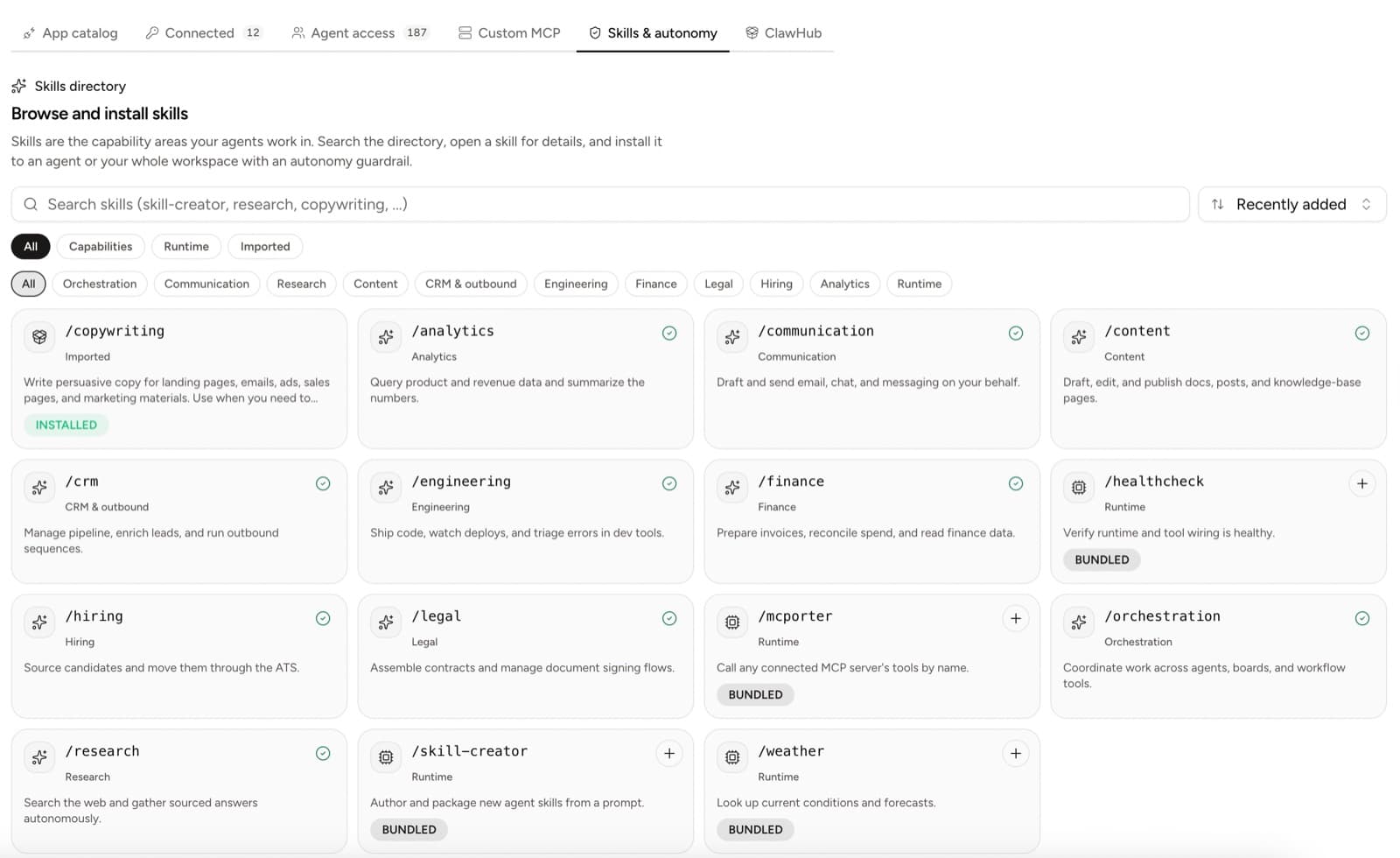
For every product image:
- crop to the relevant interface
- remove live secrets and customer data
- use a descriptive filename
- write factual alt text
- preserve dimensions to prevent layout shift
- serve an appropriately sized modern format
- explain what the reader should notice
The screenshot above supports a specific point: a content workflow can be stored as an employee skill rather than reconstructed from chat instructions every week.
Make the page discoverable
Use this technical checklist before publishing:
| Check | Why it matters |
| ------------------------ | ------------------------------------------------------------------------------ |
| 200 response | Crawlers need a successful public page |
| Googlebot allowed | Required for Google Search and its AI features |
| OAI-SearchBot allowed | Allows content discovery for ChatGPT search summaries and citations |
| One canonical URL | Consolidates duplicate paths around the preferred page |
| Accurate sitemap entry | Helps discovery and communicates true modification time |
| Server-rendered answer | Keeps important text available without waiting for client JavaScript |
| Descriptive title and H1 | States the page's topic without clickbait |
| Useful internal links | Connects the page to related concepts and makes it discoverable from the site |
| Structured data | Clarifies page type when it matches the visible content |
| Large social image | Produces a useful preview on LinkedIn, Facebook, X, and messaging applications |
| Good Core Web Vitals | Supports a fast, responsive, visually stable reading experience |
Bing recommends combining comprehensive XML sitemaps with IndexNow for time-sensitive updates. Its AI search discovery guidance also warns that lastmod should reflect a real content change rather than the time the sitemap happened to run.
Google separately says no special machine-readable AI file is required for its AI features. Do not treat an optional convention as a substitute for crawlable pages and a correct sitemap.
Run the editorial workflow as visible work
An AI employee can research, outline, draft, and refresh content, but the workflow still needs an owner and review state.
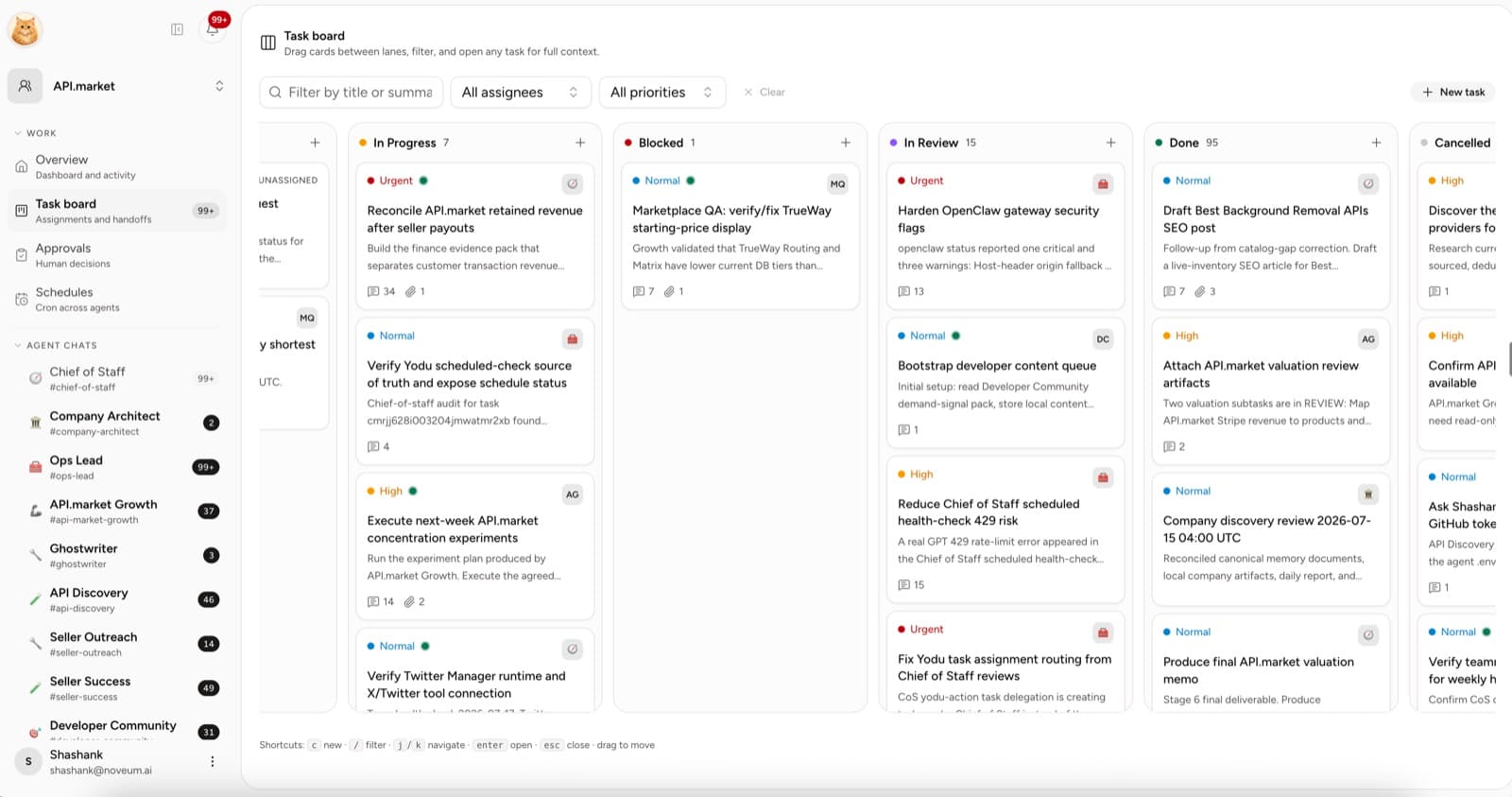
A practical lifecycle is:
- Triage: capture the audience question and why it matters.
- Backlog: confirm intent, evidence availability, and product relevance.
- Todo: assign the article with a source policy and output contract.
- In progress: collect sources and product evidence before drafting.
- Blocked: record any missing source, product access, or decision rather than drafting around it.
- In review: verify every number, link, screenshot, product claim, and metadata field.
- Done: publish only after technical and editorial checks pass.
- Refresh: reopen the task when evidence, product behavior, or search guidance changes.
The employee skill should encode the repeatable method. The task should hold the specific query, sources, screenshots, reviewer, and acceptance criteria. See how to design AI employee skills for that separation.
Measure visibility without confusing it with value
Google introduced dedicated generative-AI reporting in Search Console in 2026, while Bing added an AI Performance view for visibility across Copilot and AI-generated Bing experiences. Use those reports with ordinary search and conversion data.
Track:
- indexed pages and crawl errors
- impressions by query and page
- AI-feature impressions or citations where the platform reports them
- clicks and qualified visits
- waitlist or product conversions from organic sessions
- assisted conversions from readers who return later
- refreshes that improved or reduced performance
Do not report “AI visibility” from an unrepeatable set of manual prompts as if it were market share. Record the engine, date, location, account state, query set, and citation rule if you run manual checks.
The business metric remains the same: did the content help the right person understand the problem and take a useful next step? The AI employee ROI guide applies the same discipline to operational work.
What not to do
Avoid these shortcuts:
- publishing dozens of overlapping pages for keyword variants
- inventing statistics, customer results, or benchmark numbers
- copying summaries instead of reading the original source
- adding a new date without a substantive update
- hiding the answer behind client-only rendering
- using FAQ or Article schema that does not match visible content
- blocking crawlers and expecting the page to appear anyway
- treating a health score or audit score as a ranking guarantee
- rewriting clear human prose into repetitive “AI-friendly” sentences
Google's spam policies apply to attempts to manipulate both conventional rankings and generative AI responses. Scaled pages without original value are a liability even when every metadata field is filled in.
A 30-day operating plan
Week 1: Audit existing pages for intent overlap, unsupported claims, crawlability, canonical URLs, internal links, and page speed.
Week 2: Refresh the three pages closest to a product decision. Add original screenshots, direct answers, and primary evidence.
Week 3: Publish one new page for an unanswered customer question. Connect it to relevant documentation and existing articles.
Week 4: Review indexing, impressions, referrals, engagement, and conversions. Fix technical blockers before adding more content.
Then repeat with evidence. Search visibility compounds when a focused library becomes more useful and internally coherent, not when a calendar produces the largest number of posts.
The durable rule
Create content a founder would still be proud to send directly to a customer.
Make the answer clear. Show the real product. Cite the source. State the caveat. Keep the page fast. Give search engines and answer engines access to the same useful evidence the reader sees.
That is less magical than “ranking for AI.” It is also a much stronger publishing system.
To put the workflow into Yodu, start with the role templates and skills guide and the MCP and tools overview.