Meet the AI employees running Yodu. Hire a team like ours.
Shashank created Yodu and leads it with role-based AI employees. They share company memory and files, use connected tools, work from real schedules and tasks, and stop for human approval before anything risky. Now we are making that operating system available to other companies.
Start with one employee · Bring your own model access · Keep human control
Everything your AI team needs to do real work.
A capable model is only the beginning. Yodu brings the role, company context, capabilities, work record, controls, and infrastructure together so delegation survives beyond a single chat.
Role-based employees
Start from a proven role or define a custom job, mission, model, operating documents, and escalation path.
Read the guidePersistent memory
Maintain shared company truth and role-specific guidance without rebuilding context in every conversation.
Read the guideA durable file system
Keep uploads, source material, generated reports, code artifacts, and outputs in company and employee folders.
Read the guideInstallable skills
Add reusable operating playbooks from the Yodu directory or import skills from ClawHub, then assign them to the right employee.
Read the guideTools and MCP
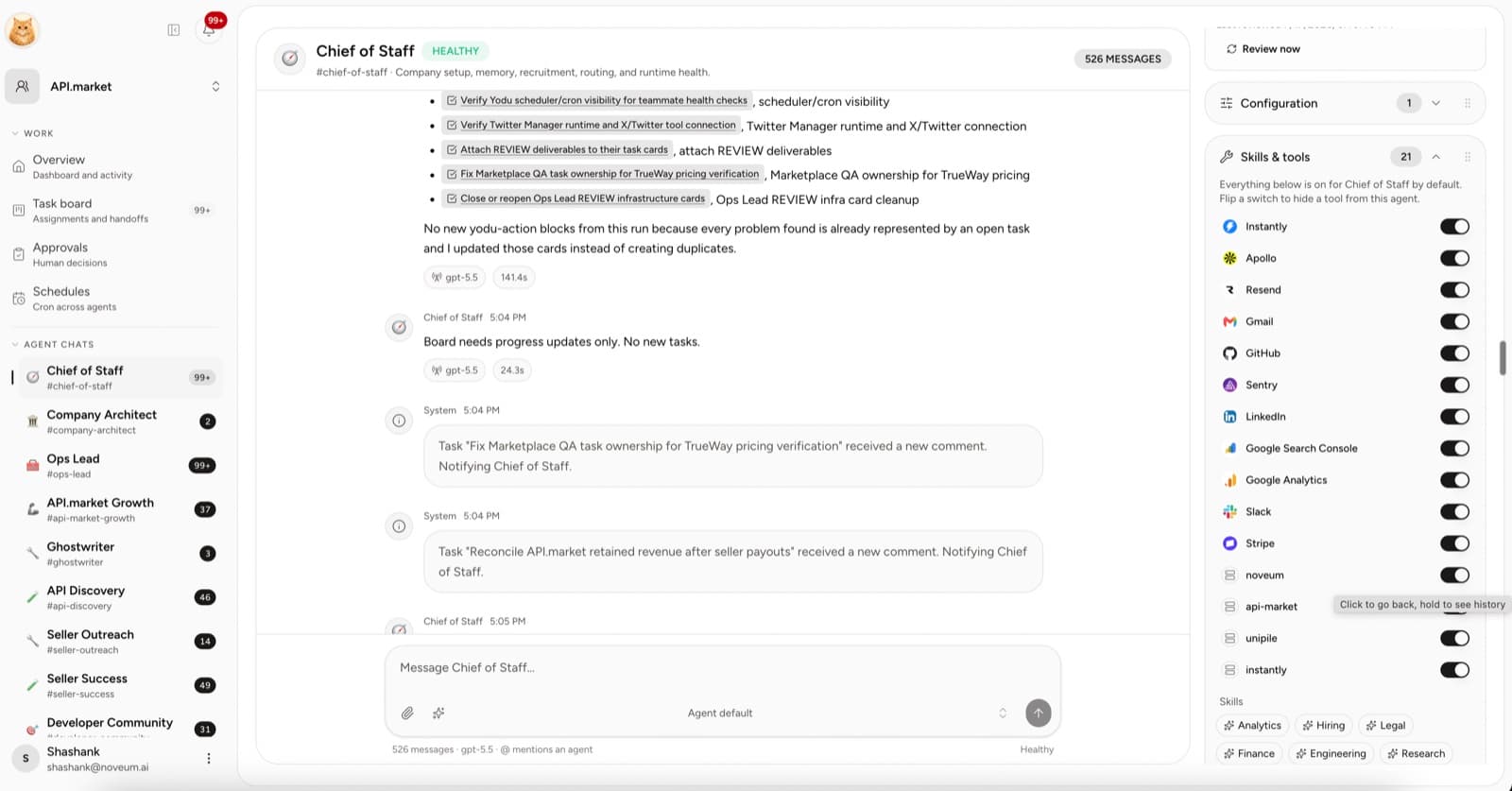
Connect business apps, register custom MCP servers, and switch each one on or off per employee. Risky actions still stop for approval.
Read the guideManaged execution
Provision employee workspaces, monitor health and events, run scheduled jobs, and track backup freshness from one control plane.
Read the guideA complete work loop
From a plain-English brief to a reviewable, durable result.
Brief the role
Load context
Use skills + tools
Apply guardrails
Keep the output
See the system behind the employee.
Every screen below is from the current Yodu product. Each one solves a part of the delegation problem that a prompt box leaves to you.
Build the team around the jobs you actually need done.
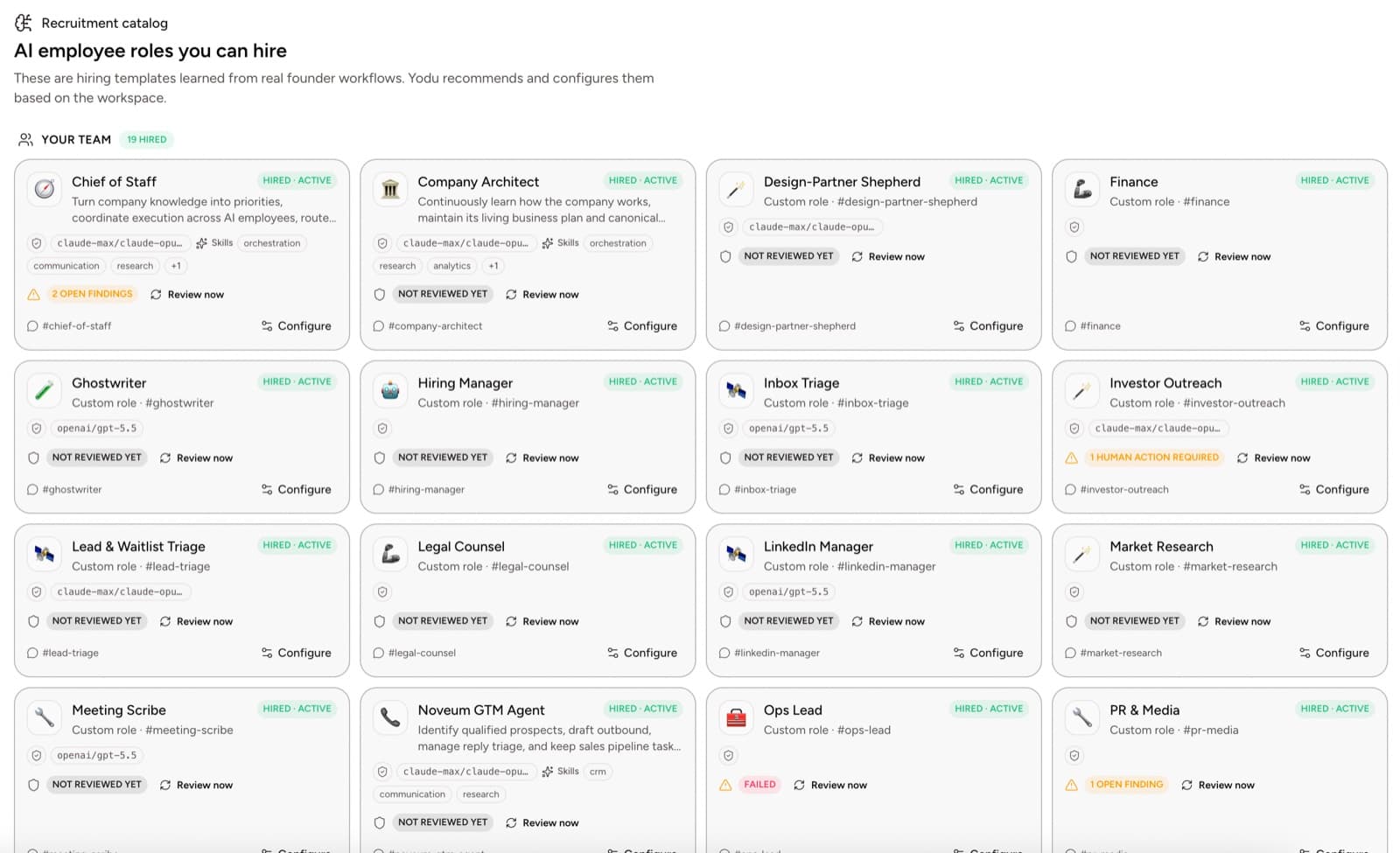
Hire from role templates, then adapt the mission, model, working style, company access, and operating documents to the business.
- Research, sales, content, support, operations, and engineering roles
- Editable role, tool, memory, runtime, and schedule policies
- Separate workspaces for companies, clients, or operating boundaries
Give each employee a growing library of skills.
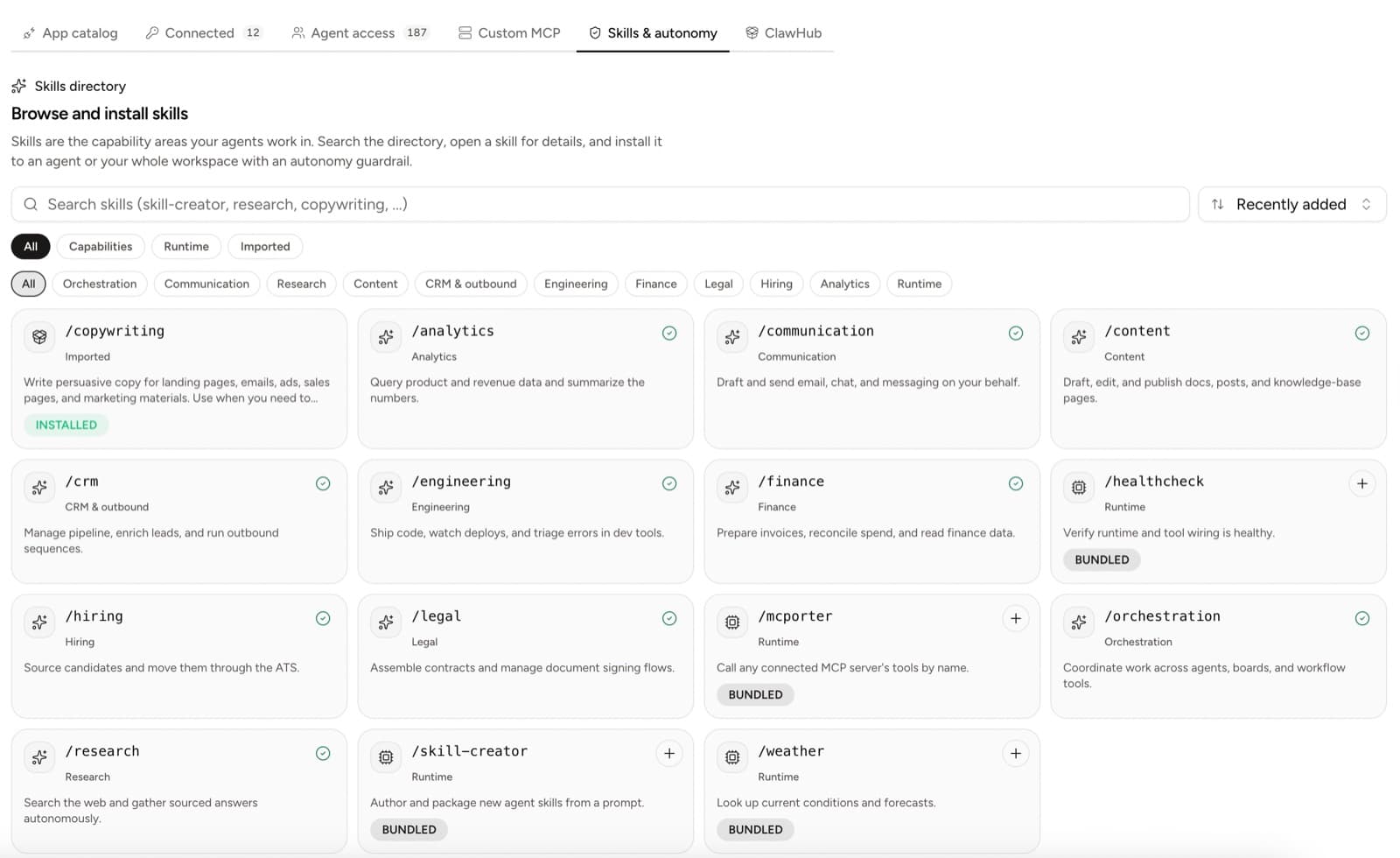
Skills are reusable operating playbooks, not raw account access. Browse built-in capabilities, search ClawHub, review the source and metadata, then install and assign deliberately.
- Built-in skills for research, content, CRM, engineering, finance, legal, and more
- ClawHub discovery and import with owner, popularity, and source links
- Employee-level assignment keeps capability separate from credentials
Connect the systems your company already runs on.
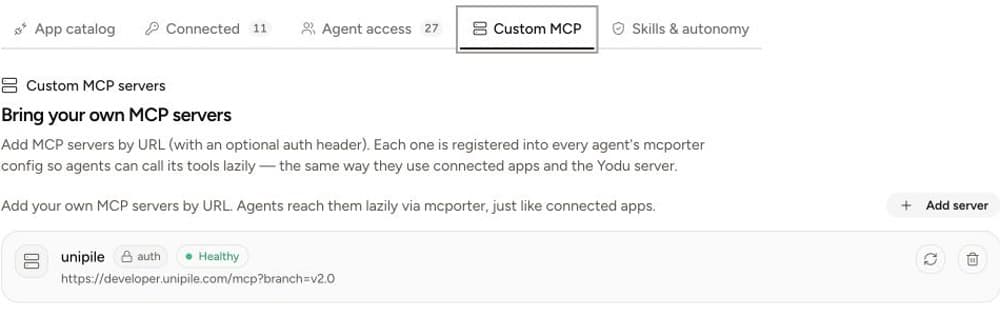
Use managed app connections when they fit. Register an authenticated remote MCP server when you need an internal API, specialist tool, or custom workflow.
- App catalog and connected-account management through Composio
- Custom MCP registration, protocol health checks, and tool enumeration
- One switch per app per employee — off means the employee cannot even see it
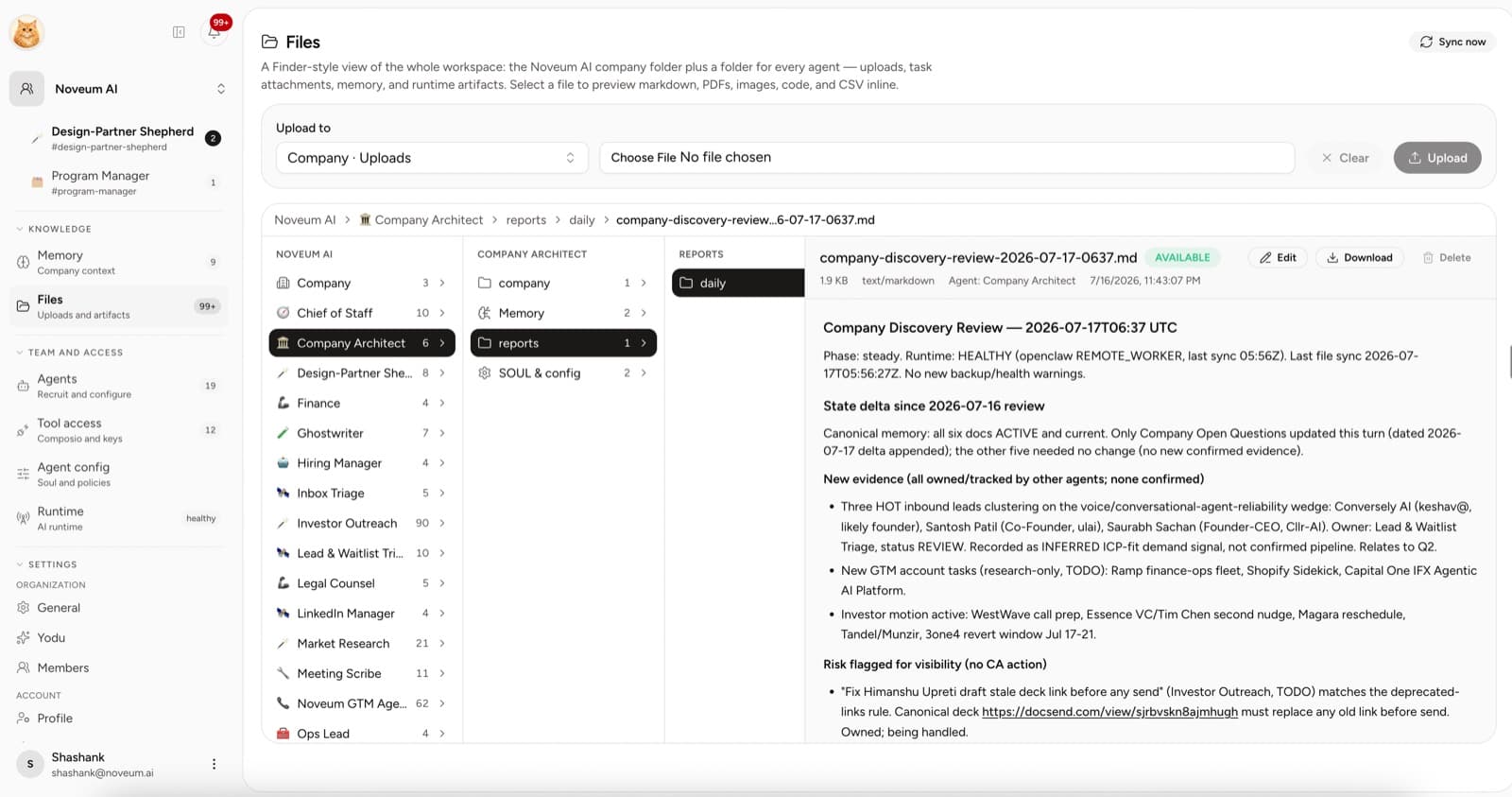
Keep company knowledge and work artifacts durable.
Shared memory holds maintained company truth. The file system holds source documents and generated artifacts. Tasks and channels link the right material back to the work.
- Company memory and role-specific operating context stay distinct
- Company and employee folders preserve uploads and generated files
- Versioned operating documents make active policy explicit
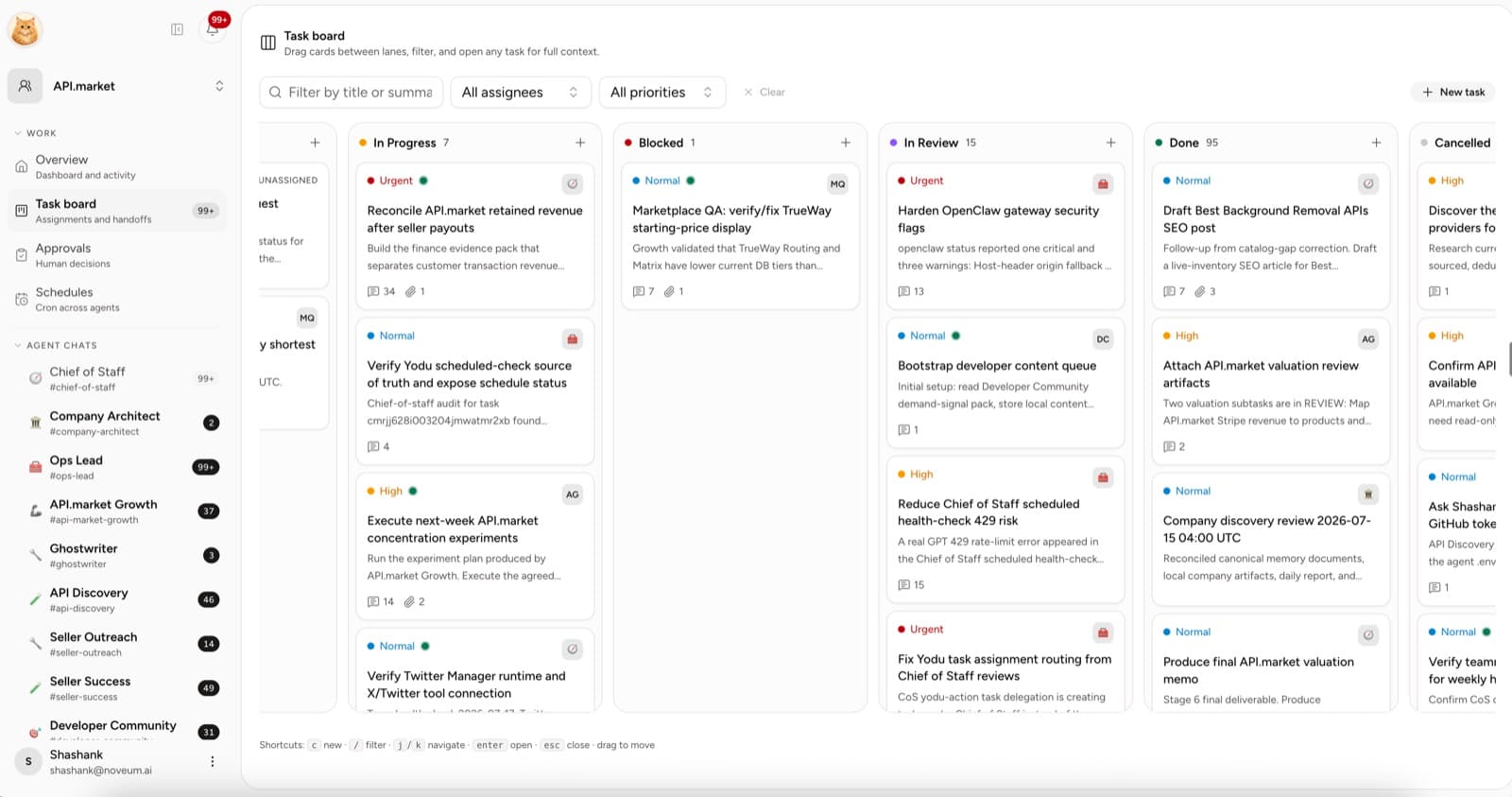
Run the work on a board, not inside an endless thread.
Every meaningful assignment has an owner, state, source material, comments, files, and review path. Recurring work uses the same visible operating model.
- Triage, backlog, todo, in progress, blocked, review, done, and cancelled
- Scheduled jobs keep a clear employee owner, run history, and next run
- Sensitive external actions stop for a human decision
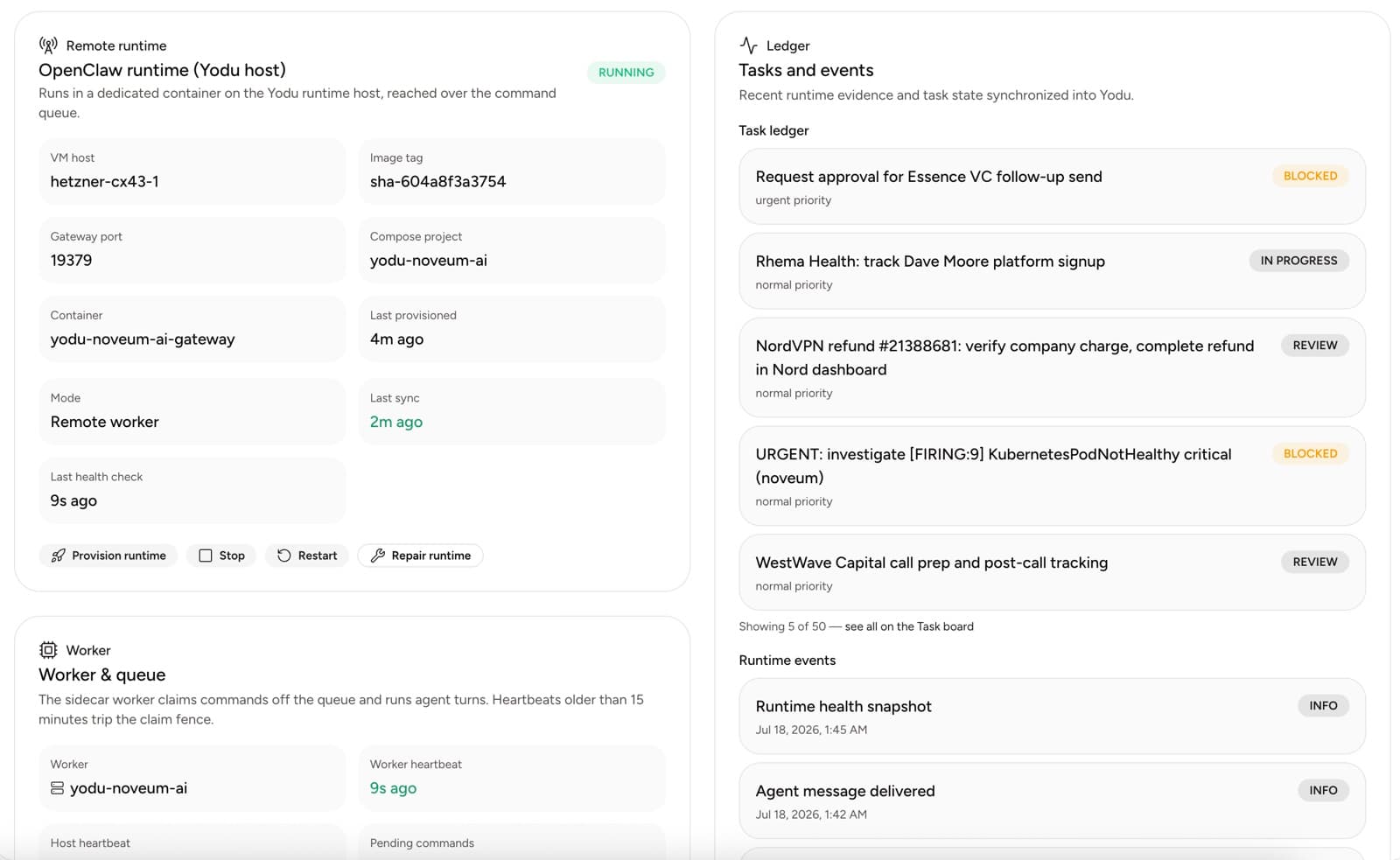
The runtime is managed. The work stays yours.
Yodu's control plane prepares each employee workspace, keeps runtime ports private, records live health and events, runs scheduled work, and shows backup freshness without making you assemble the infrastructure yourself.
Workspace runtime
Execution and continuity controls
Workspace provisioning
Prepare employee identities, policy files, memory guidance, and tool configuration in isolated workspaces.
Health and runtime evidence
See worker heartbeat, container state, queues, task events, and per-employee delivery health.
Scheduled execution
Run recurring responsibilities through the same runtime with ownership, state, and history.
Backup visibility
Track scheduled and safety backups, last-backup age, archive size, and recorded manifest evidence.
Backup visibility does not replace a tested recovery plan. Restore verification remains an operator responsibility and is documented explicitly.
Built so you can safely connect the accounts that matter.
An AI team is only useful with real access. Yodu is built around isolation, encryption, and human control so giving that access is a decision you stay in charge of.
A dedicated runtime, not a shared sandbox
Each workspace runs OpenClaw in its own Docker container on the managed runtime host, reached only through Yodu's command queue. Runtime ports stay private, and no other customer shares the container.
Keys are encrypted and never returned
Model keys, connected-account credentials, and workspace secrets are stored encrypted. The product never displays a stored key again — you rotate keys instead of retrieving them.
Risky actions stop for you
Employees are autonomous for routine work, but before anything is sent, posted, spent, or deleted, the action pauses for your decision — as an inline card in chat or in the approvals queue. Allow once, allow for a session, or deny.
Tool access is a switch you own
Every connected app is a per-employee switch. Off means the employee cannot even see the tool; on means it works under your approval gate. Flip it back any time.
You authorize every connection
Apps connect through OAuth to accounts you own and act under your guardrails. Workspace access stays limited to members you invite, and API and MCP keys are scoped and revocable.
Backed up, with evidence
Workspaces are backed up on schedule, with backup freshness, archive size, and manifest evidence visible in the product — not a checkbox you have to take on faith.
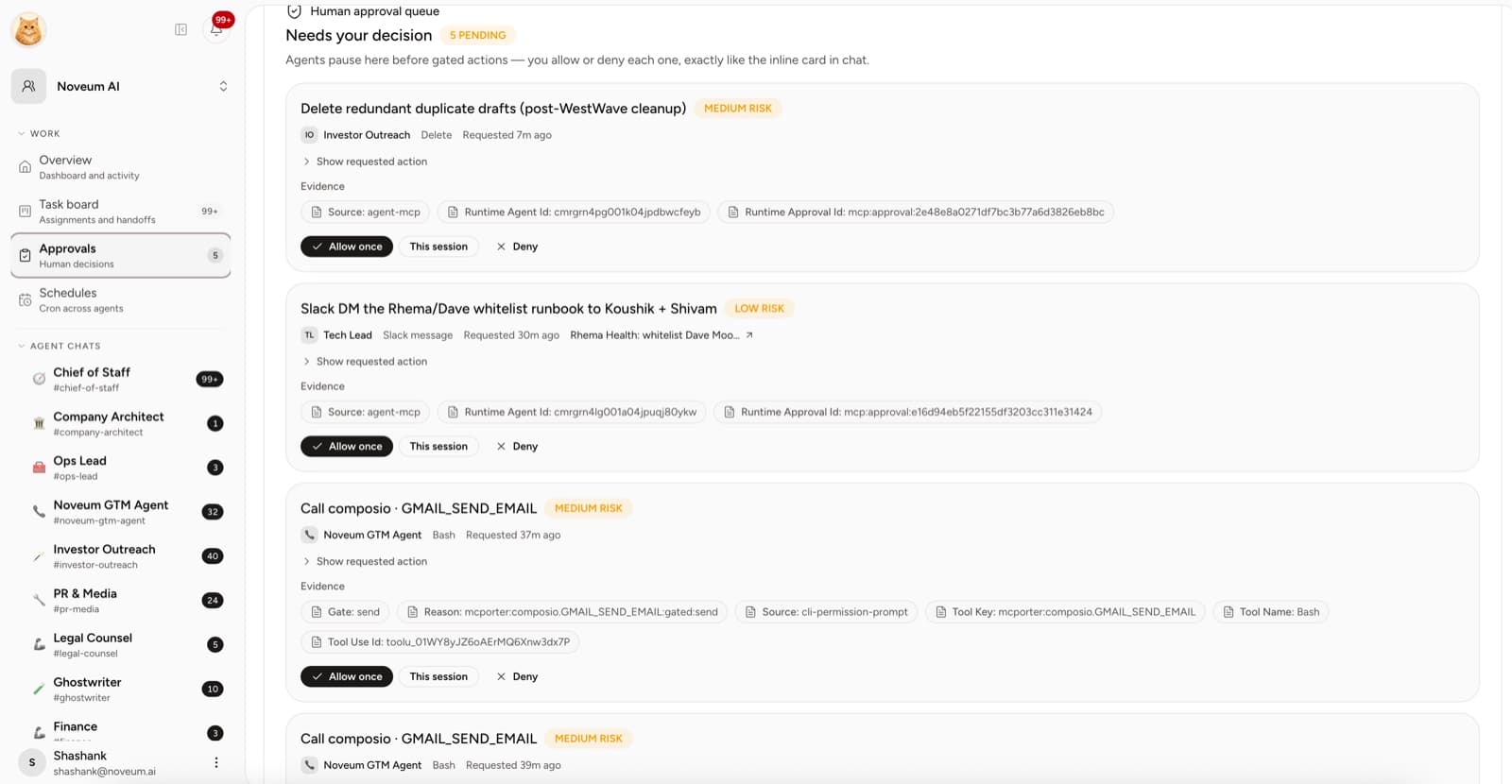
Autonomous where it's safe. Human where it matters.
Delegate in minutes. Keep control for the long run.
Start with one clear assignment. Yodu keeps the context, execution, review, and result connected as the team grows.
Brief the employee
Describe the outcome in plain English and assign an owner.
Attach the context
Add memory, source files, examples, and the right capabilities.
Let the work run
The employee uses assigned skills and bounded tool access.
Review where it matters
Approve sensitive actions and correct the brief or policy once.
Keep the result
Outputs, files, decisions, status, and evidence stay with the work.
Join the founder research waitlist
We’re learning with founder-led technical teams that want recurring operating work handled by a supervised AI company team. Tell us what workflow you want help with; strong fits may be invited to a research call or design-partner trial.
The difference is what happens after the prompt.
Yodu is built for the handoff: who owns the work, what they know, what they can access, where the output goes, and what still needs a human.
Context before output
Employees should use company docs, examples, files, tasks, and tool results before making claims.
Approval by risk
Draft-only, approval-required, and autonomous modes can vary by employee, tool, and action.
What happened is visible
Tool calls, schedules, errors, generated files, and review status should not be hidden from the operator.
Work does not disappear
Files, memory updates, reports, drafts, and work artifacts need durable storage and backup.
Introductory pricing while we onboard personally.
Choose $99/month or $990/year for a limited time. Both introductory prices cover one Yodu workspace; model and API usage remains under your provider accounts.
Yodu.ai Pro
Run one supervised AI company workspace for $99/month or $990/year during the introductory period.
- AI employees with shared company memory, tasks, files, schedules, and approvals
- One workspace per subscription; choose monthly or annual billing
- Use connected tools and model access under your workspace controls; no unlimited-usage promise
We onboard early customers personally. Your 15-day free trial starts only after invitation, when you begin checkout.
$99/month and $990/year are limited-time introductory prices and may increase later.
Questions founders ask before hiring AI employees
The practical questions founders ask before they let AI touch real work.
Your next hire can start before your next headcount plan.
Start with one useful role, one connected tool, and a real first backlog. Keep the controls you need and expand from there.