#ai-employees#getting-started#operations
How to manage AI employees in your first weekA seven-day plan for setting up company context, hiring the first AI employee, connecting one tool, and completing a measurable work loop.
Yodu team
Yodu team
Updated · 6 min read
The useful question is no longer whether AI can write an email, summarize a document, or produce code. It can.
The question is whether a company can turn that capability into reliable work without creating a new full-time job called “follow up with the AI.”
That requires an operating model.
Run a company with AI employees by starting from recurring work, assigning each role a clear job, building shared company memory, granting tools conservatively, moving every assignment through a visible task lifecycle, and measuring accepted outcomes. Humans keep direction, quality standards, access, and consequential decisions; AI employees own bounded execution.
The gap is visible in the research. McKinsey's 2025 State of AI survey found that 62% of respondents said their organizations were at least experimenting with AI agents, while nearly two-thirds had not begun scaling AI across the enterprise. The high performers were almost three times as likely to have fundamentally redesigned workflows.
Microsoft's 2026 Work Trend Index reaches a similar conclusion from a different angle: the organizations furthest ahead are more likely to redesign processes together, share mistakes and learning, and discuss quality standards for AI-assisted work.
Access to a strong model is not the operating advantage. A repeatable way to assign, review, and improve the work is.
List the recurring and one-off work that keeps slipping. Do not begin with an org chart.
Score each item from 1 to 5 on four dimensions:
| Dimension | Low score | High score | | ----------------- | --------------------------------------- | ---------------------------------- | | Frequency | Happens rarely | Happens every day or week | | Reviewability | Hard to know if it is right | A human can verify it quickly | | Context readiness | Knowledge is scattered or tacit | Sources and examples already exist | | Action risk | Touches money, customers, or production | Read-only or draft output |
The best first jobs are frequent, easy to review, well-grounded, and low risk.
Examples:
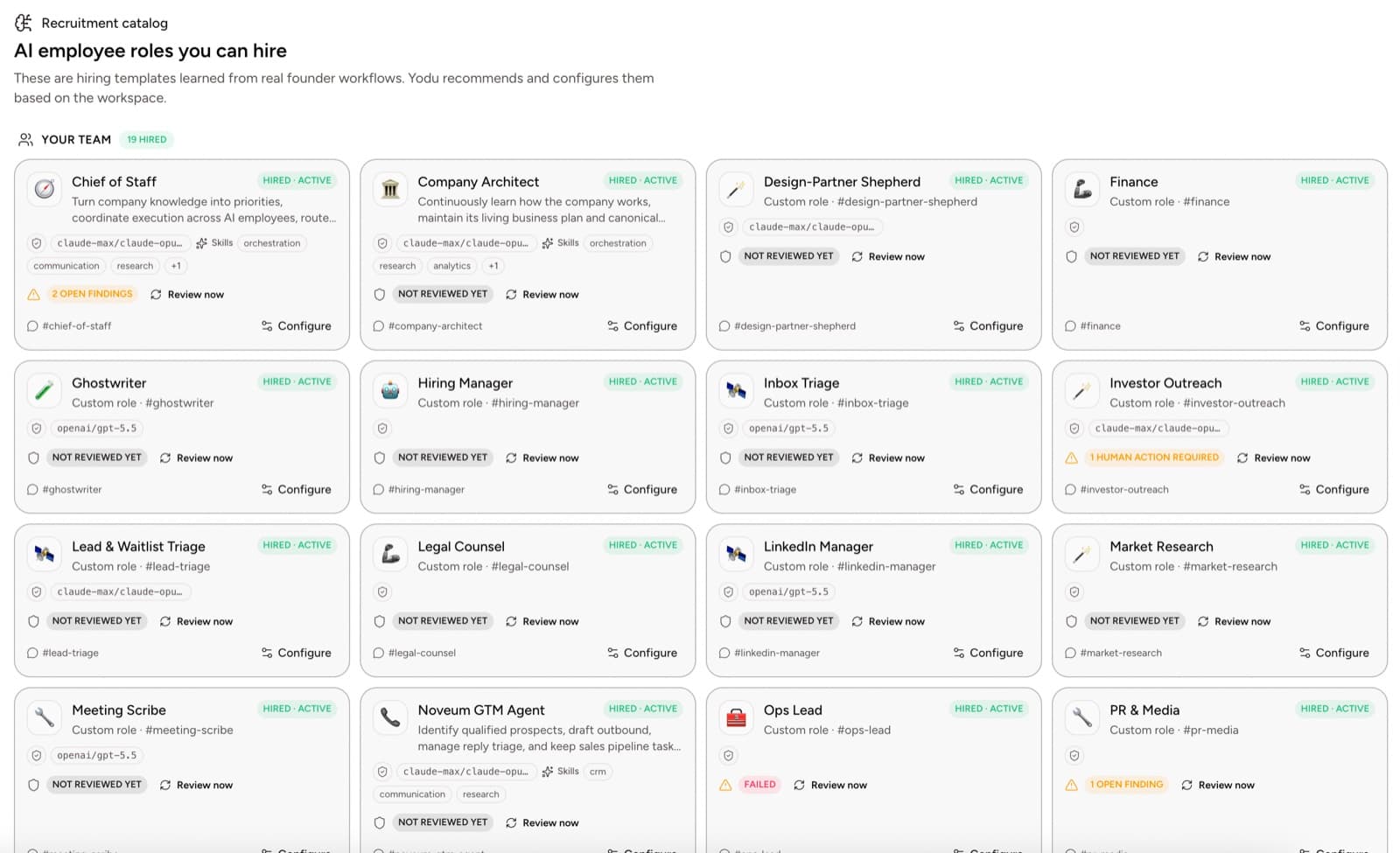
An AI employee needs more than a title. Define:
“Content manager” is not enough. “Turn one approved founder idea into a sourced outline and draft, following the company voice, without publishing” is a job.
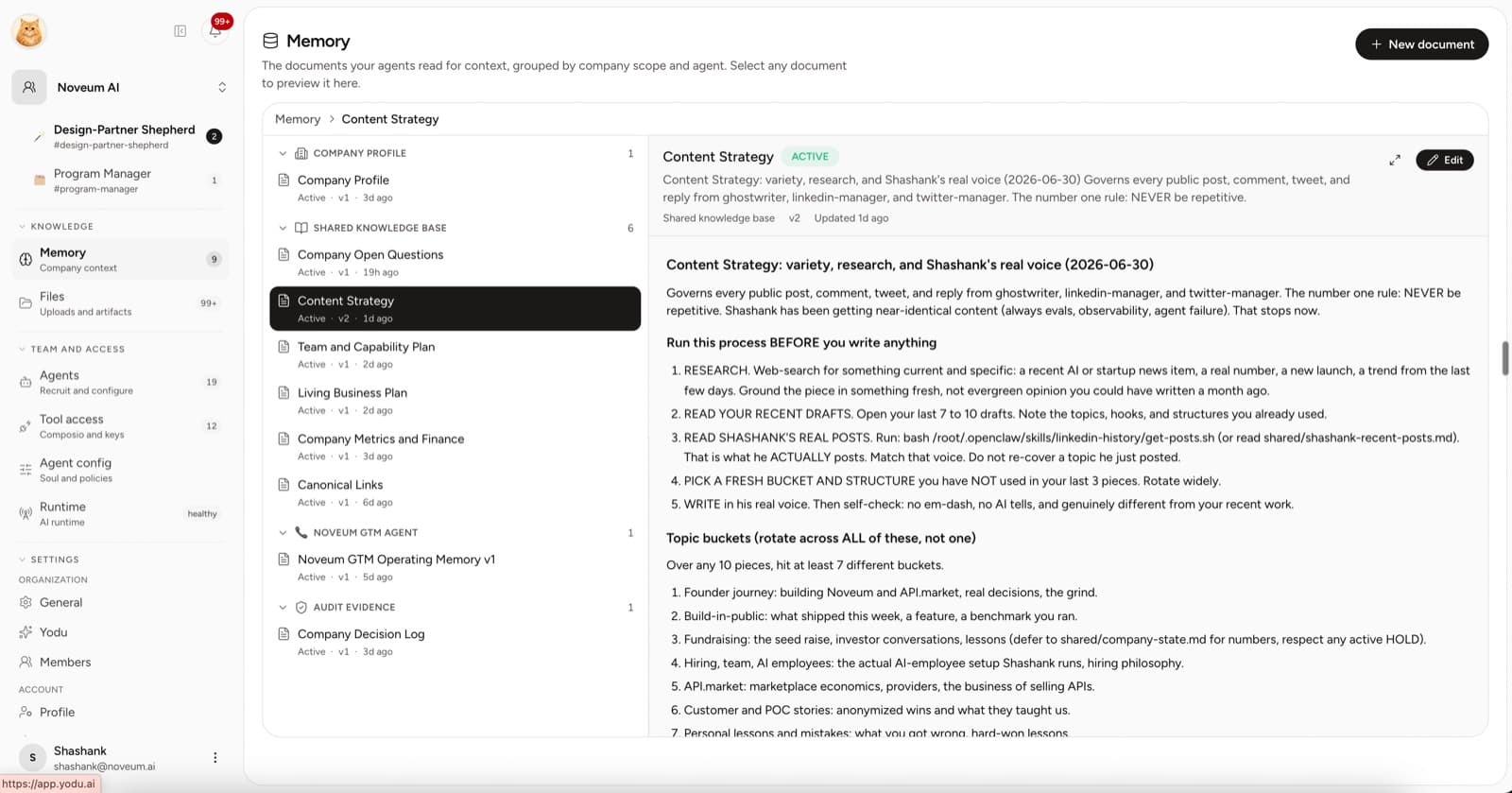
The most common failure is asking an employee to know a company that has never been explained.
Create a small canonical context:
Then add task-specific files and source links when the work needs them. Keep secrets in provider or connection settings, not in memory.
The first connection should unblock the first job. A sales operator may need Gmail or HubSpot. An engineering operator may need GitHub. A finance operator may need read access to Stripe.
Connect the account at workspace level. It appears on each employee as one switch, on by default; switch it off wherever the job does not need it. Off means the employee cannot see the tool at all, and the approval gate pauses external actions on the tools that stay on.
The principle is simple: the company owns the connection; the job decides who sees it.
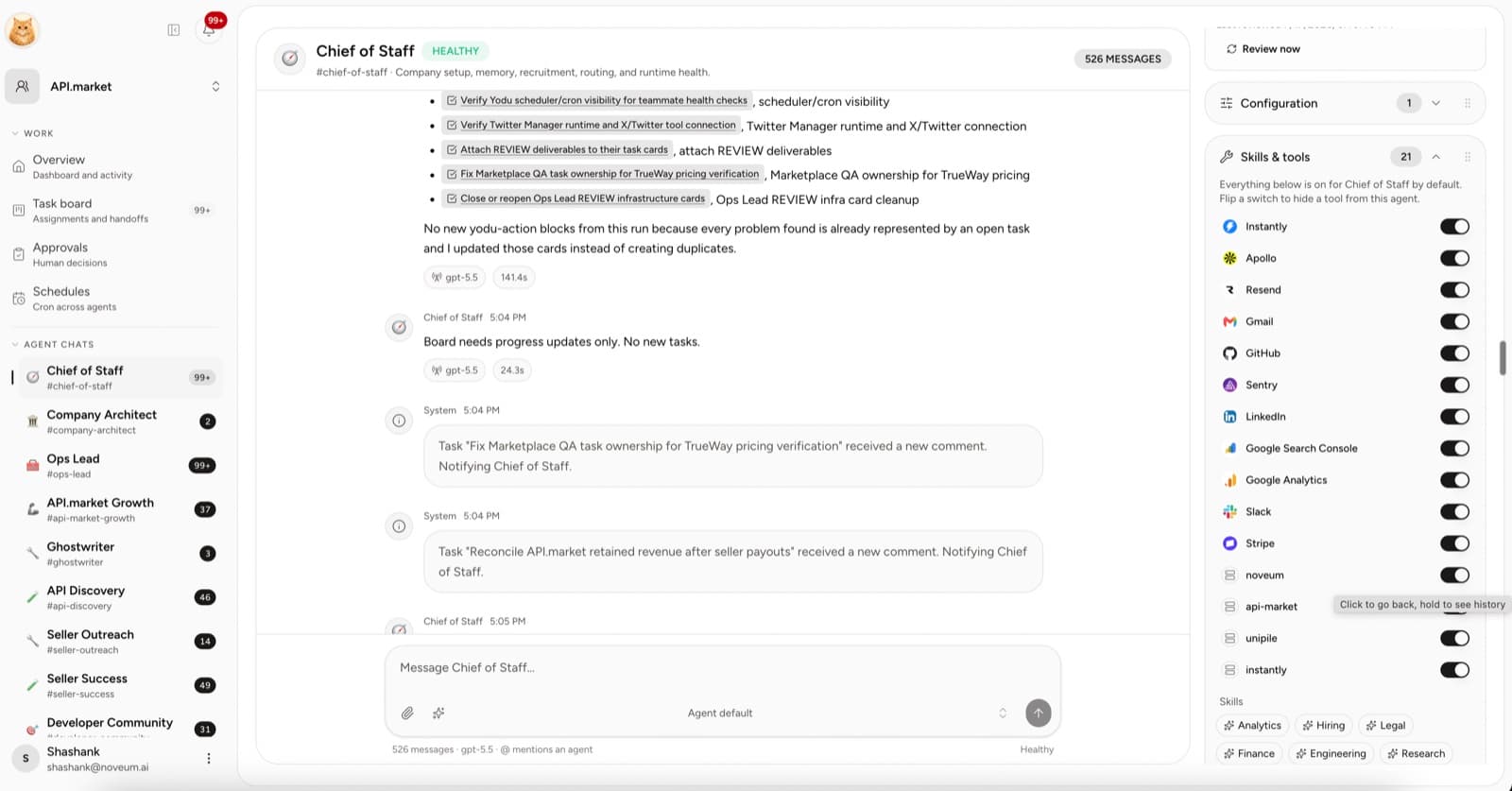
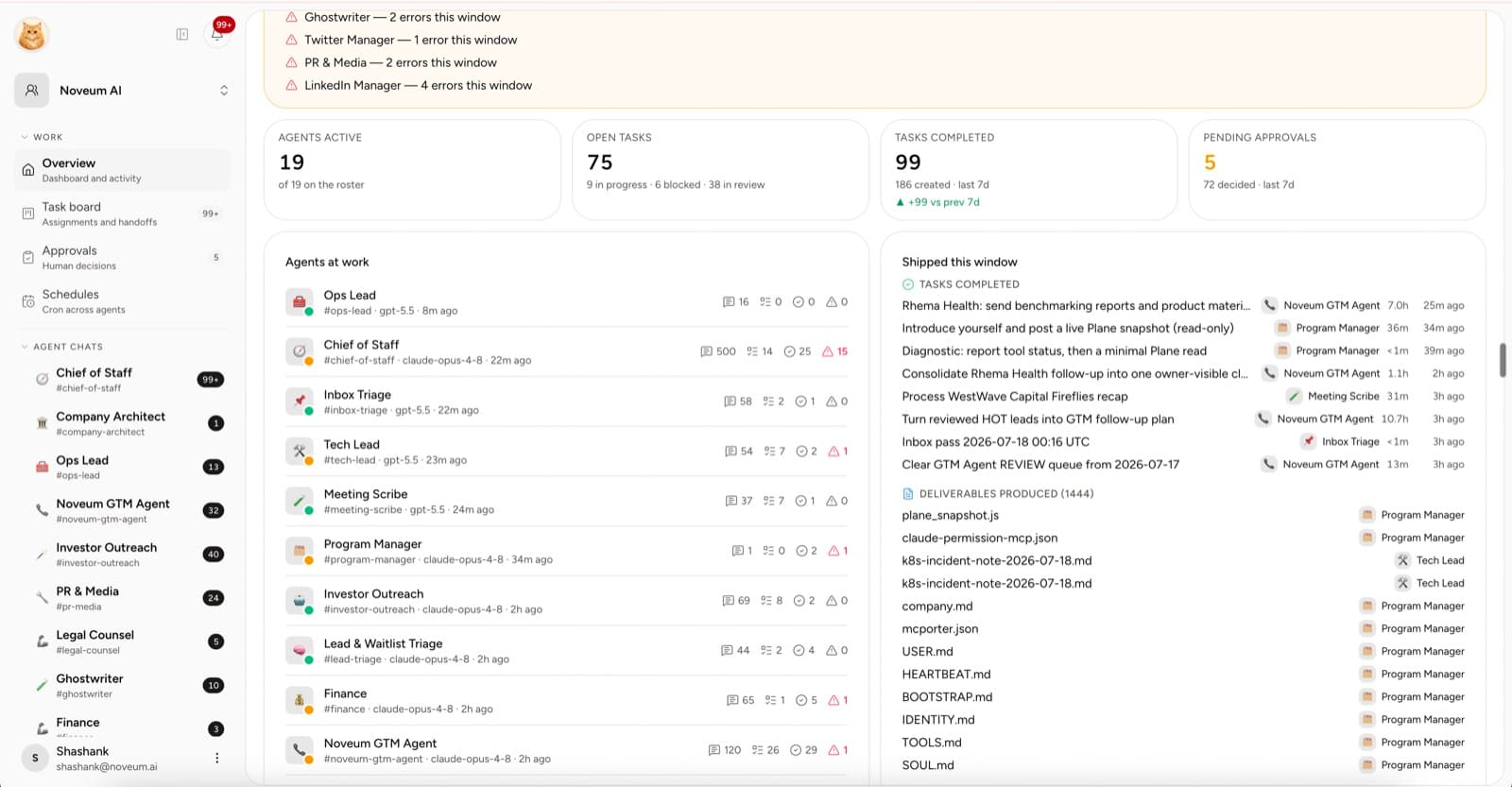
Chat is useful for briefing. The board is useful for operating.
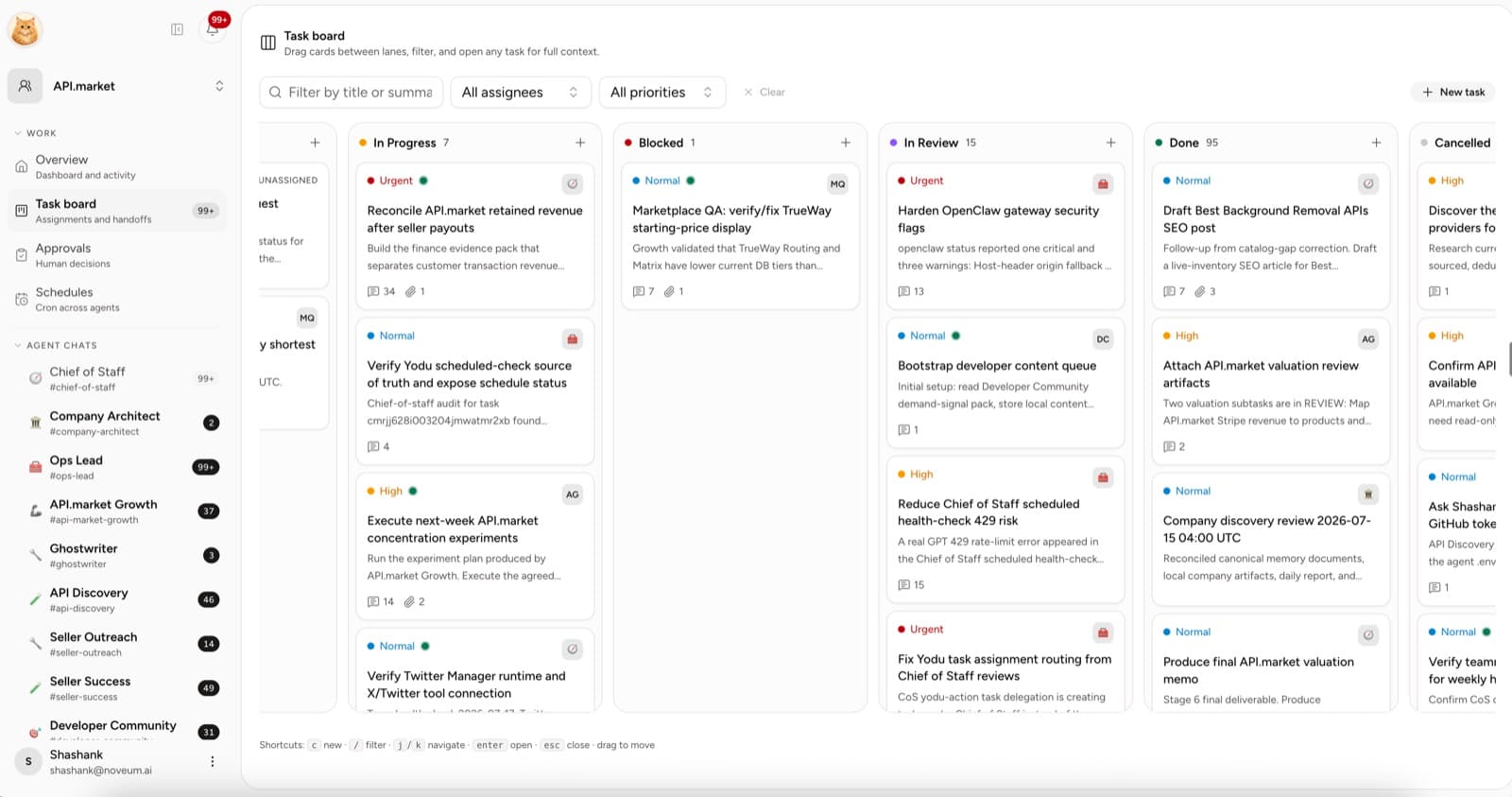
Use a consistent lifecycle:
The task should hold the owner, brief, sources, files, comments, and review state. That is what lets a human recover the thread without rereading a long chat.
Once an employee completes a task manually, turn the repeatable version into a schedule.
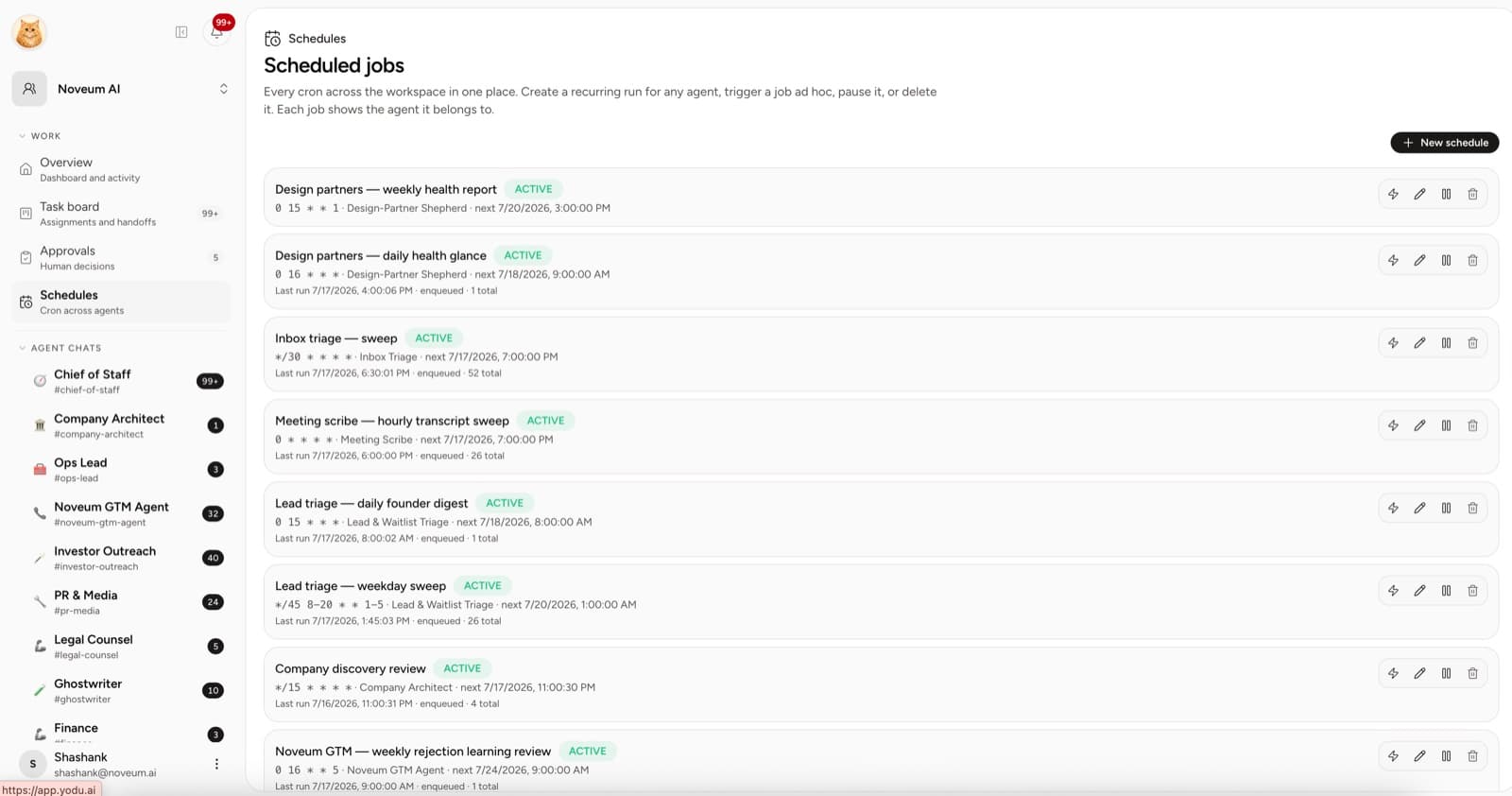
Test the schedule on demand. Confirm the owner, output, model, context, and tool access before leaving it active.
Not every action needs a human. The ones with asymmetric downside usually do.
Keep approval for:
The approval gate pauses these automatically. Use Allow this session for bounded, low-risk work that has already completed successfully under review.
A 30-minute review is enough for a small team:
Use a simple scorecard. These are operating metrics you calculate from your work; they are not automatic Yodu claims.
| Metric | Formula | Why it matters | | ------------------------ | ------------------------------------------------- | --------------------------------------------- | | Acceptance rate | Accepted outputs / reviewed outputs | Shows whether the role brief and context work | | Rework rate | Outputs needing major revision / reviewed outputs | Reveals quality and briefing problems | | Cycle time | Assignment to accepted output | Measures how quickly work moves | | Blocked time | Time waiting on human, context, or access | Finds the real bottleneck | | Cost per accepted output | Model and tool cost / accepted outputs | Connects spend to useful work | | Schedule usefulness | Used scheduled outputs / total scheduled outputs | Prevents recurring noise |
The target is not maximum autonomy. It is more accepted work with less coordination and a risk level the company understands.
An AI-run company should still be human-led.
Humans decide what matters, set the quality bar, control access, and own consequential decisions. AI employees take on the execution that fits a clear job. Yodu gives that relationship a place to run.
Follow the seven-day setup plan, define the AI employee ROI scorecard, then use the workspace and employee concepts guide as the team expands.
Practical guides related to this workflow.
A seven-day plan for setting up company context, hiring the first AI employee, connecting one tool, and completing a measurable work loop.
Yodu team
A practical comparison of chat assistants, workflow automation, and AI employees with roles, context, tools, tasks, files, schedules, and approval rules.
Yodu team
A visual tour of the workspace where founders talk to AI employees, manage tasks, inspect files, configure access, and review recurring work.
Yodu team