#ai-employees#operations#founders
How to run a company with AI employeesA practical operating model for giving AI employees real jobs, context, tools, recurring work, and review without losing human control.
Yodu team
Yodu team
Updated · 4 min read
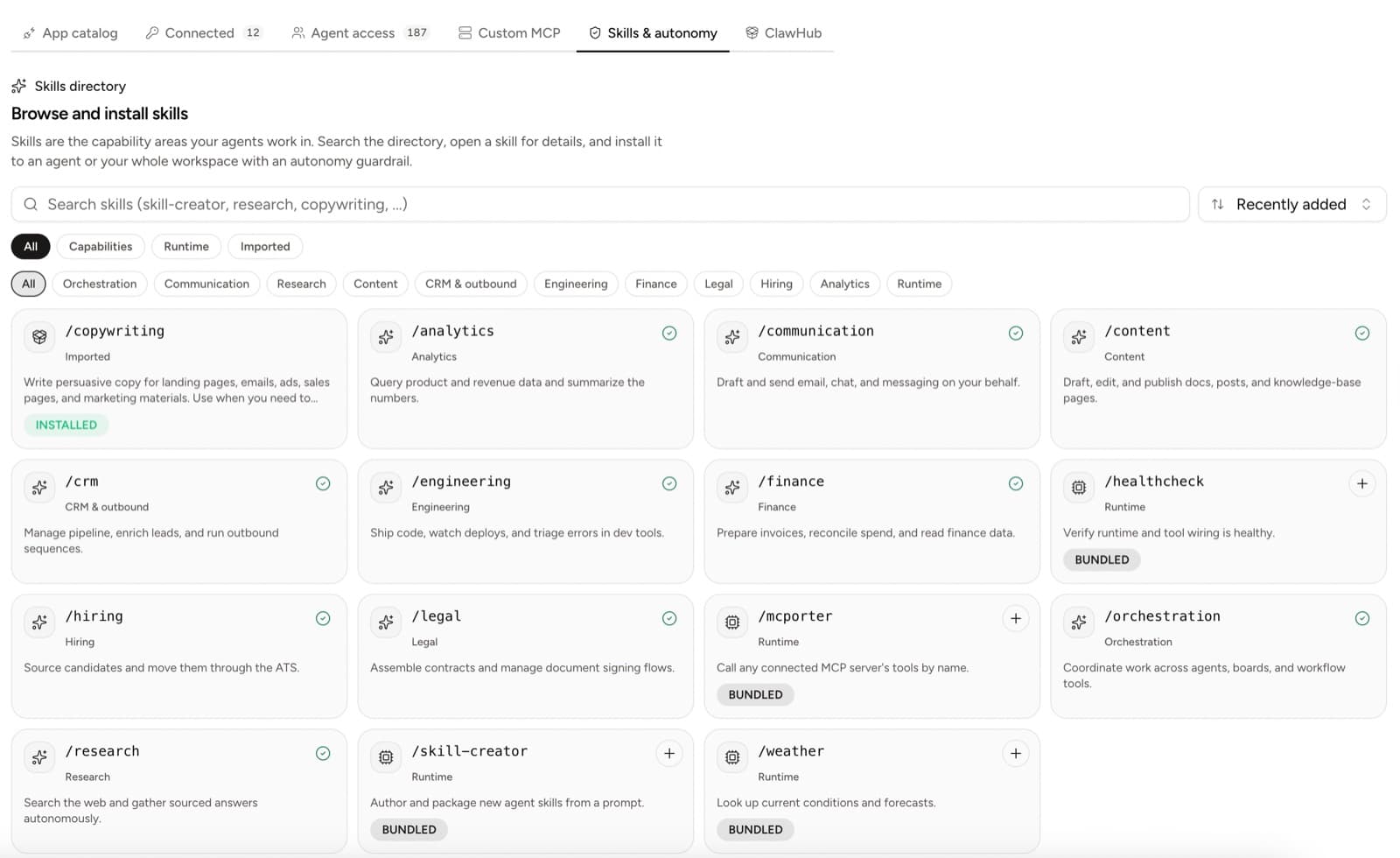
A tool gives an AI employee an action. A skill gives it a way to work.
That distinction matters. Gmail can send a message, but it does not teach a sales employee how to research the account, use the right evidence, write in the company voice, or know when not to send.
An AI employee skill should describe one repeatable job: when to use it, required inputs, ordered method, output contract, quality checks, and approval boundary. Build it from recurring human corrections, test normal and failure cases, version meaningful changes, and measure first-pass acceptance rather than how long the instruction file is.
This is a knowledge-transfer problem, not just a prompt-writing problem. In an NBER field study of roughly 5,000 support agents, AI assistance increased issues resolved per hour by 13.8% overall and helped less-experienced workers most. Anthropic's published agent architecture guide likewise separates tool access from the workflows and instructions that shape how an agent uses it. Neither result guarantees a skill will work; both support testing whether encoded methods improve a specific job.
Do not create a skill because the name sounds useful. Create one when:
Good first skills:
“Run growth” is not a skill. It is an ambition.
| Layer | Example | | ------------------ | ------------------------------------------------ | | Company memory | ICP, offer, proof, brand voice | | Role configuration | Sales operator mission and boundaries | | Skill | How to draft a qualified follow-up | | Tool | Gmail and CRM actions | | Task | Follow up with the five accounts from this event |
Keep the skill reusable. Do not bury one customer's facts or an API key inside it.
State one outcome.
Prepare a customer-ready follow-up draft from an approved call transcript and account context.
List what must exist before the employee starts:
Describe the important reasoning steps, not every word the model should emit.
Specify the deliverable:
Define what the employee checks before returning:
State what can happen automatically and what must wait.
Save the draft to the task. Do not send the email or change the CRM stage without approval.
After each task, classify feedback:
This prevents the system prompt from becoming a landfill for every correction.
Open Skills & autonomy and install the skill for one employee.
Installing a communication skill does not grant Gmail. Connect the account separately; it appears on the employee as a single on-off switch, and the approval gate still pauses any send.
Use:
Score each on accuracy, completeness, usability, source use, and policy adherence.
| Metric | What it reveals | | ----------------------- | -------------------------------------- | | First-pass acceptance | Whether the output contract is clear | | Major rework | Whether the method or context is weak | | Missing-context catches | Whether the employee knows when to ask | | Policy adherence | Whether the approval boundary works | | Time to accepted output | Whether the skill reduces coordination |
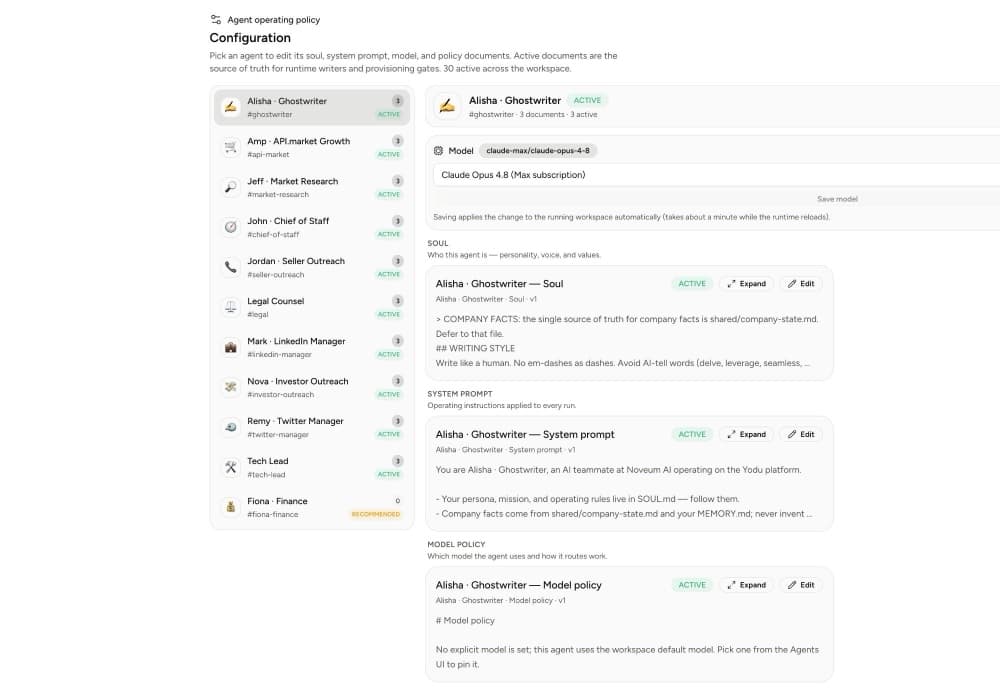
Use active and draft configuration documents to review meaningful changes. Change one major instruction at a time, run the same test set, and activate the better version.
The best skill is not the longest. It is the smallest playbook that helps one employee produce a useful, reviewable result repeatedly.
Use the role templates and skills guide, test it in the first-week operating loop, then connect the skill to a measurable workflow with the AI employee ROI scorecard.
Practical guides related to this workflow.
A practical operating model for giving AI employees real jobs, context, tools, recurring work, and review without losing human control.
Yodu team
A seven-day plan for setting up company context, hiring the first AI employee, connecting one tool, and completing a measurable work loop.
Yodu team
A practical comparison of chat assistants, workflow automation, and AI employees with roles, context, tools, tasks, files, schedules, and approval rules.
Yodu team