#ai-employees#operations#founders
How to run a company with AI employeesA practical operating model for giving AI employees real jobs, context, tools, recurring work, and review without losing human control.
Yodu team

Shashank Agarwal
Updated · 4 min read
API.market helps developers find and subscribe to APIs. Sometimes, a developer arrives from Google looking for an API we don’t yet offer. That gives us a category to investigate and a reason to find new sellers.
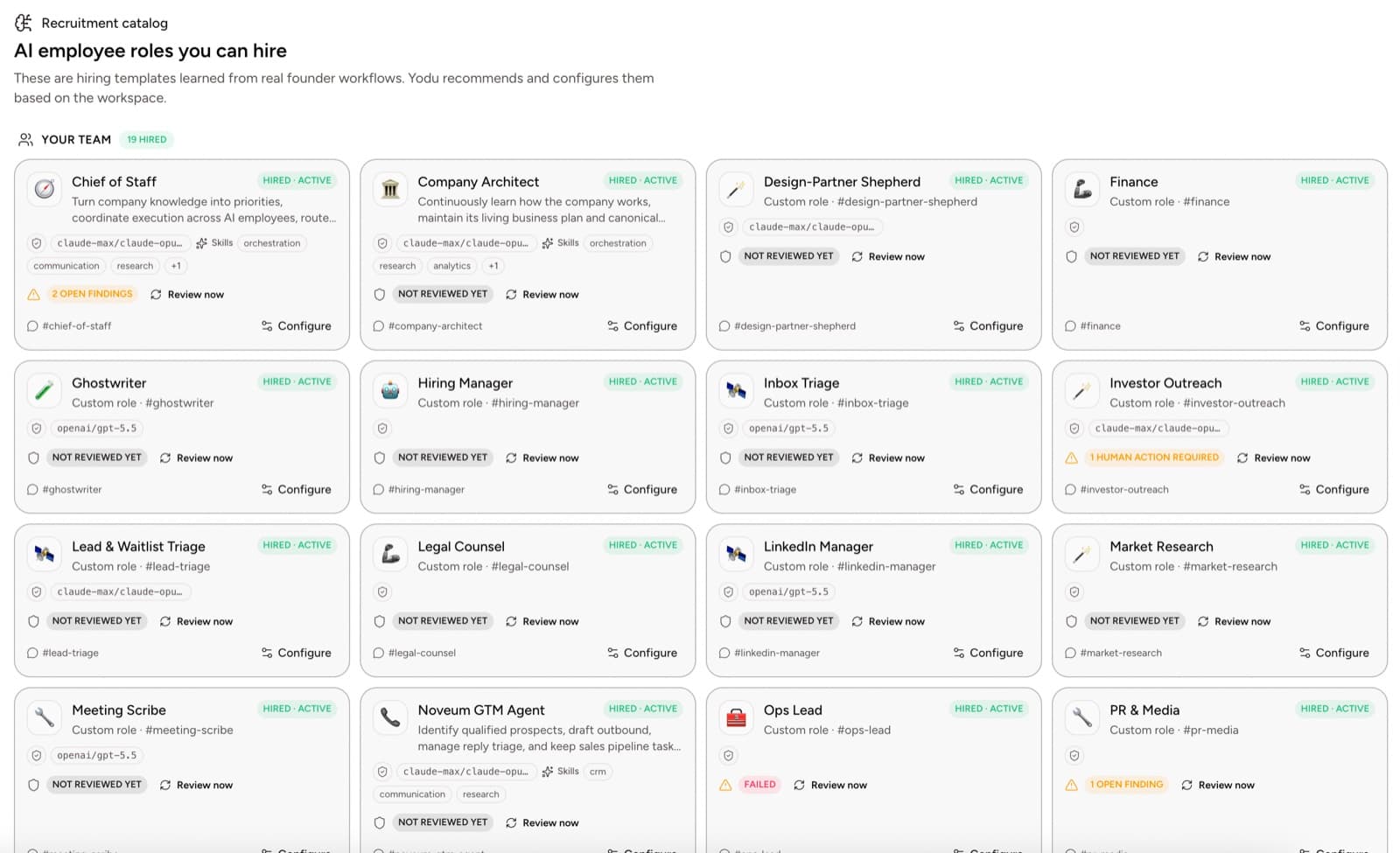
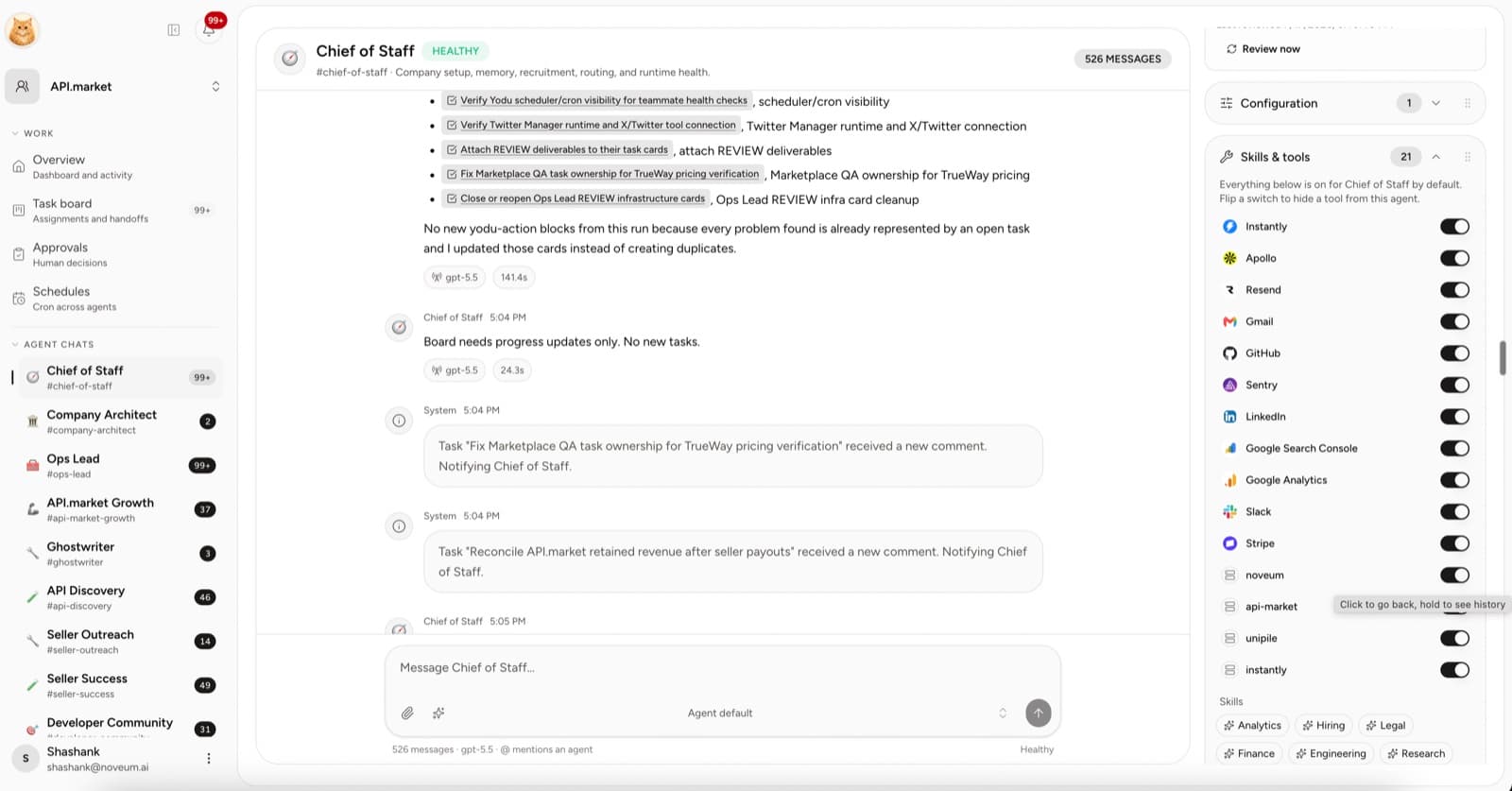
We use Yodu to help with that work. SEO Content reviews search demand, API Discovery checks the catalog, and Seller Outreach researches providers and prepares messages. Chief of Staff coordinates the tasks and reviews the results.
I’m Shashank Agarwal, founder of both API.market and Yodu. This account describes our own workflow and selected task records reviewed on September 13, 2026.
Explore the illustrated API.market case study.
The starting point is a search query and its landing page. SEO Content checks impressions, clicks, and click-through rate in Search Console. It compares those signals with the page’s content and the APIs available in the catalog.
A page with low CTR may need a better match to the search query. A missing API category calls for provider research. Subscription conversion is another question: that requires product analytics, beyond Search Console.
| Job | Employee | Result | | ---------------------- | ----------------------------------- | ------------------------------------------------------------- | | Review search demand | SEO Content | Queries, pages, clicks, impressions, and CTR | | Check catalog coverage | API Discovery | Relevant listings and categories to investigate | | Research providers | Seller Outreach | API documentation, product fit, and contact sources | | Prepare outreach | Seller Outreach | Proposed recipients and personalized messages | | Coordinate and review | Chief of Staff and a human reviewer | Accepted results, approval decisions, and remaining questions |
Seller Outreach uses provider websites, documentation, web searches, and Apollo to investigate potential sellers. The messages explain why the provider’s API could fit the category we’re researching.
On September 5, SEO Content checked an imported backlog of 50 issues against current Search Console evidence. It recommended keeping 22, re-deriving 17, merging seven, and closing four. Chief of Staff accepted those recommendations.
This produced a reviewed set of priorities. Publishing the proposed changes and measuring their effect were separate steps.
API Discovery identified a potential provider of congressional trading data and passed the research to Seller Outreach. The final September 9 task record reports an approved lead added to Instantly with a personalized subject, opening email, and three follow-ups. Chief of Staff accepted the task that morning.
Our general workflow calls for up to five personalized messages. This recorded example used four. This account is based on the final task record; we did not independently check the campaign through Instantly’s API. Private contacts and campaign identifiers are omitted.
A separate calendar-API task included provider research and approval requests. When reviewed on September 13, it remained blocked, and its discussion contained conflicting reports about campaign progress. We could not confirm new outreach had been sent, so we do not count it as completed outreach.
The task makes that uncertainty visible. A reviewer can inspect the research and decide what needs to happen next.
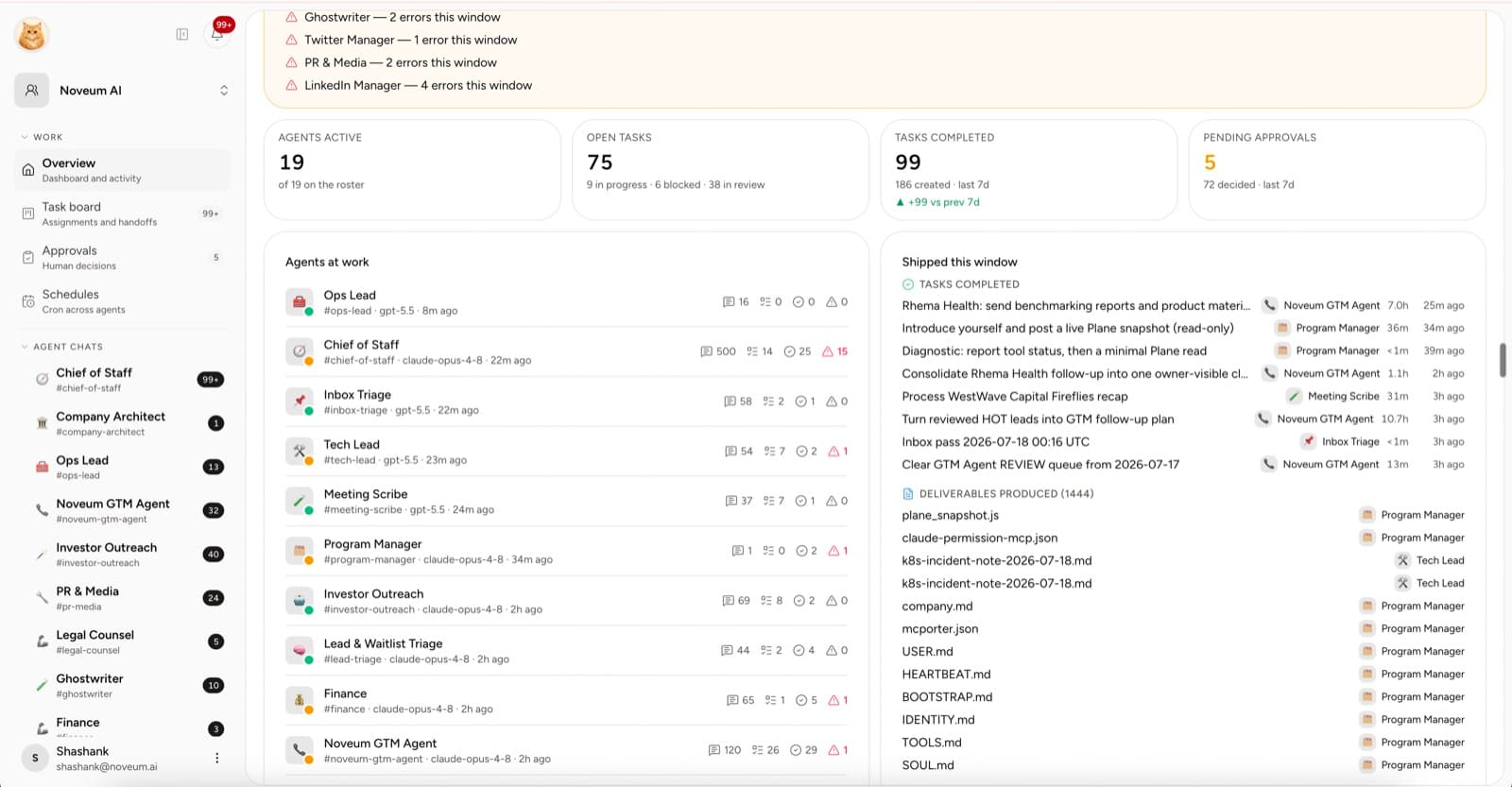
Each task has an owner, status, and expected result. Research and drafts are saved as files. The conversation records questions and feedback, while approval requests show the action waiting for a decision. Recurring jobs can run on a schedule once the process has been tested.
The homepage workspace example lets you explore conversations inspired by this work. The messages and tool calls there are simulated examples.
For connection details, see the tool-access guide. Employees need access to the relevant tools, and their permission settings determine which actions require approval.
The campaign view reports positive-reply percentages of 33.3%, 60%, and 50% for its first three steps. Their unweighted average is 47.8%: (33.3 + 60 + 50) ÷ 3, rounded to one decimal.
Each step gets equal weight. This is an average of the reported positive-reply percentages, not the overall campaign reply rate or the share of unique prospects who replied. Follow-ups reach overlapping recipients, and the step volumes differ. The fourth step has no reported percentage and is excluded.
The campaign figure does not establish revenue growth, completed seller onboarding, or whether these selected tasks caused the result. See the calculation in the case study.
Start with a recurring job and a result you can check: a researched lead, a support reply, or a set of content recommendations. We’ll help connect the tools, run a task, and review the output with you.
Sign up for personal setup with Shashank. Selected companies pay $499/month from the first month, including personal account and AI employee setup. No free trial.
Practical guides related to this workflow.
A practical operating model for giving AI employees real jobs, context, tools, recurring work, and review without losing human control.
Yodu team
A seven-day plan for setting up company context, hiring the first AI employee, connecting one tool, and completing a measurable work loop.
Yodu team
A practical comparison of chat assistants, workflow automation, and AI employees with roles, context, tools, tasks, files, schedules, and approval rules.
Yodu team